IDI Composites International Recognized as a Healthiest Employeer

Noblesville, IN: (September 9th, 2026): IDI Composites International continues to focus on our employees’ health and wellness and is being recognized for the 3rd year in a row as one of the healthiest employers in the 100-499 employee category.

A statement from the Healthiest Employer organization:

Each year, the Healthiest Employers awards program recognizes organizations that are prioritizing employee well-being and investing in healthier workplaces. We’re proud to celebrate the employers recognized in the 2026 Indiana program and the positive impact they have on their workforce and communities.

To see all the district announcements so far, you can access those from here: https://www.healthiestemployers.com/districts

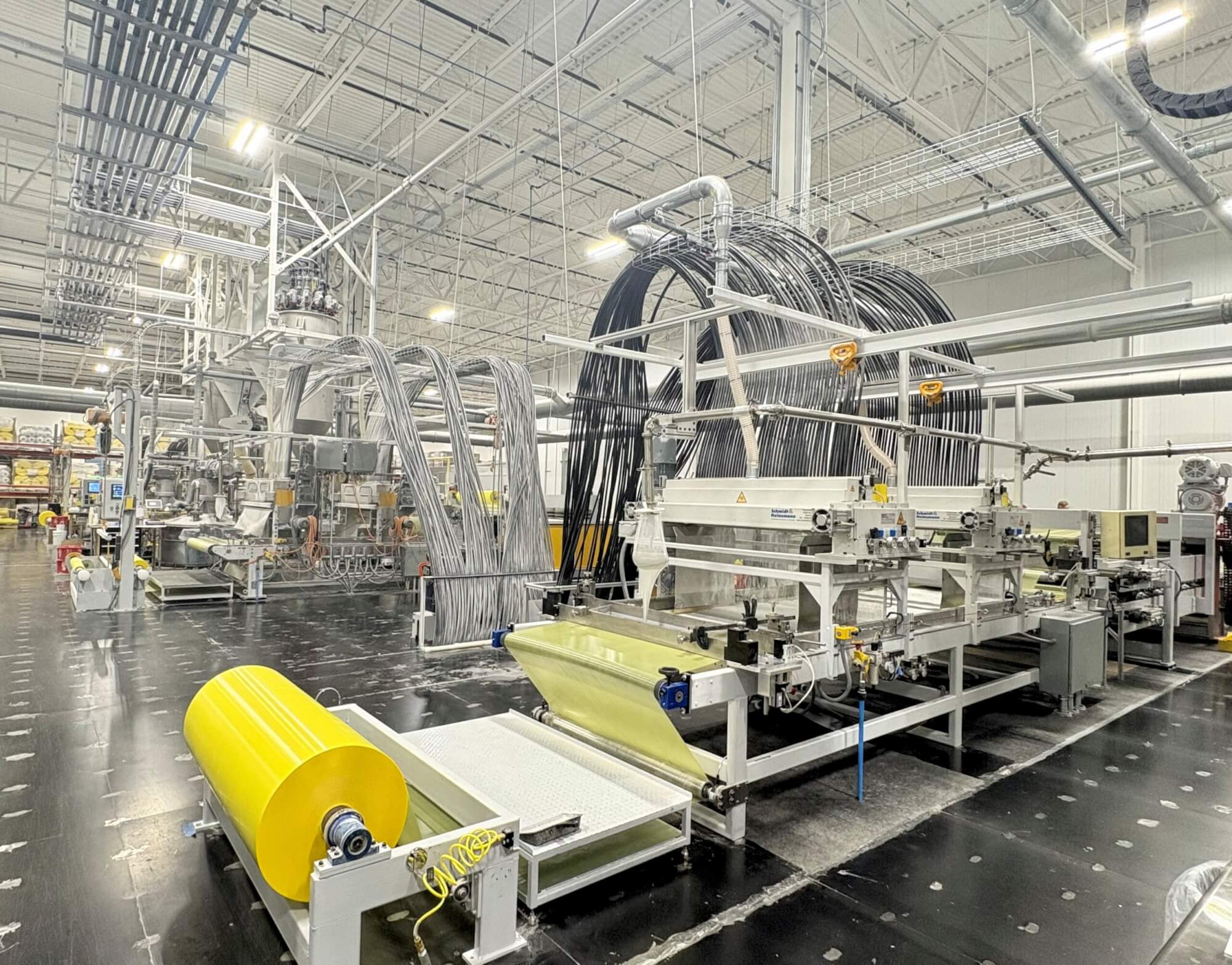
IDI Composite International Expands Production Capacity & Lowers Lead Times with Launch of Third SMC Line

Noblesville, IN: (January 12th, 2026) IDI Composite International is pleased to announce the launch of its third Sheet Molding Compound (SMC) production line in our new Noblesville, Indiana facility.

In 2024, IDI relocated from its former Noblesville site to a purpose-built facility designed to support the company’s growing operational needs. The new building enabled the installation of two new advanced production machines, adding meaningful capacity and productivity while upholding IDI’s standards of quality and performance. Throughout 2025, IDI focused on optimizing and calibrating these machines to ensure seamless integration and enhanced efficiency.

The third SMC line adds to this commitment to operational excellence. “We’ve now brought online a third SMC machine that was designed to cost-effectively produce lower volume manufacturing runs. This line is fully operational and delivering immediate benefits, allowing us to reduce lead times to 3-4 weeks and lower our minimum order quantities,” according to IDI North America General Manager, Saby Indrasenan.

IDI is proud to close out 2025 with this milestone and enter 2026 positioned for continued growth.

About IDI Composites International

Founded in 1966, IDI Composites International is the premier global formulator and manufacturer of thermoset molding composites and compounds for OEMs, Tier 1 suppliers, and molders. IDI provides both standardized and customized polyester/vinyl ester-based SMC and BMC. IDI’s unwavering focus on market development, operational excellence, and the development of more sustainable composite materials has established its reputation as a trusted leader in the composites industry.
For more information, please visit www.idicomposites.com.

Montana Advanced Composites Announces new General Manger, Paul Adams

Manhattan, MT: (January 29th, 2026) Montana Advanced Composites (MAC, Manhattan, Mon.), a 100% U.S.-owned developer and manufacturer of hot-melt advanced prepregs and ancillary composite materials, welcomes Paul Adams as general manager. Adams comes to MAC with vast industry expertise and enthusiasm to collaborate with customers, suppliers and MAC’s growing team.

He has 20-plus years of experience in the aerospace and advanced composites industry. Most recently, he was director of quality for Toray Advanced Composites and has previously worked for Wisk, Boeing and Northrup Grumman in quality and manufacturing process roles.

IDI Composites International Announces the Promotion of Saby Indrasenan to General Manager, North America

Noblesville, IN: (January 29th, 2026) IDI Composites International announces the promotion of Saby Indrasenan to General Manager, North America. With 24 years of experience at IDI across multiple geographies and leadership roles, Indrasenan brings deep institutional knowledge and a proven global perspective to this role.

Over the course of a distinguished career with IDI, Indrasenan has led diverse teams and managed complex business units internationally, most recently overseeing IDI’s operations in Mexico. Known for strong operational, commercial and financial acumen, he has consistently driven performance, growth and cross-regional collaboration.

According to IDI’s CEO Tom Merrell, “We are fortunate to have Saby moving up into this key role for IDI. Saby is committed to delivering meaningful results through collaboration with our customers, suppliers and employees.”

Indrasenan holds a bachelor’s degree in mechanical engineering from the College of Engineering Guindy, Chennai, India; a master’s degree in industrial engineering from Purdue University, West Lafayette, Indiana; and an MBA in international business from ESCP-EAP, Paris, France.

Industrial Dielectrics Holdings & IDI Composites Announces the Promotion of Lucy Houchin

Noblesville, IN: (January 29th, 2026) Industrial Dielectrics Holdings, the parent company of IDI Composites International (Noblesville, Ind., U.S.) and Montana Advanced Composites (MAC, Manhattan, Mon., U.S.), announces the promotion of Lucy Houchin to executive VP.

Houchin joined Industrial Dielectrics Holdings in 2016 and most recently served as the general manager of MAC. Her other roles have included managing director of IDI Composites International – U.K. and director of corporate marketing. No matter the role, her work is always grounded in uncompromising values and aimed at delivering meaningful results.

Houchin will be moving to corporate headquarters in Noblesville, where she will be involved on a global basis with the company’s mission priorities of operational excellence and the development of the composites market. “Given Lucy’s tactical experience with both of our business groups, she will be a valuable resource for all of our business units in the execution of our strategic mission,” says Tom Merrel, IDI CEO.

IDI Composites International Announces Opening Of New Global Headquarters And State-Of-The-Art Manufacturing And Technology Center

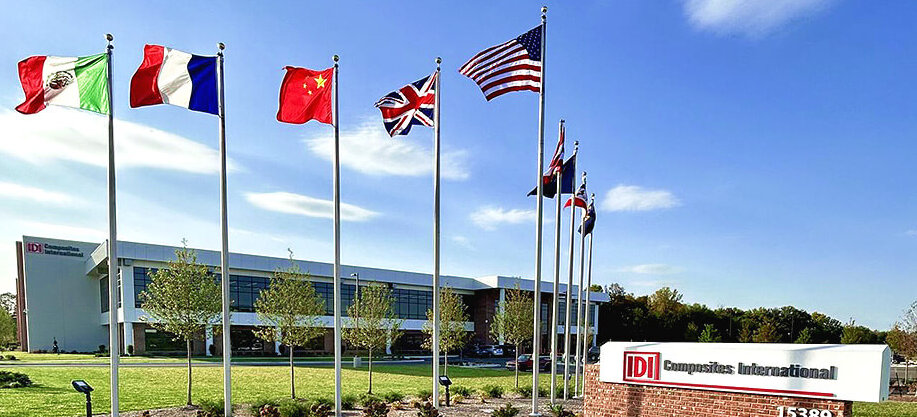
Noblesville, Indiana: (October 9, 2024) IDI Composites International (IDI) proudly announces the opening of its new global headquarters and next generation manufacturing facility in Noblesville, Indiana. This major investment represents a significant milestone in IDI’s commitment to innovation and excellence in the production of thermoset composite materials.

“We really believe our new manufacturing operations will help lead the industry to the next level of competency that’s going to be needed in order to meet the growing expectations for more sophisticated composites solutions; our intention is to make composites the best material choice.” says Tom Merrell, CEO.

The new, 120,000 square foot facility houses IDI’s corporate headquarters, sheet molding compound (SMC) and bulk molding compound (BMC) manufacturing, and the 3i Composites Technology Center. With numerous operational innovations included in the design of the new facility, IDI is doubling its production capacity of SMC and BMC.

“The Noblesville facility is a testament to IDI’s commitment to the industry, designing and manufacturing composite materials that provide engineering advantages and value to our customers and their products,” says Tom Flood, Vice President of IDI Composites International – North America.

Key features of the new facility include:

  • New SMC Lines: The new facility houses a total of three production SMC lines, including two new, 60” wide lines. The facility will also house IDI’s Ultrium Carbon Fiber SMC line and a pilot R&D line in the 3i Composites Technology Center.
  • Efficient Raw Material Storage and Automated Handling: An expanded resin tank farm and filler silos efficiently houses and distributes critical raw material components throughout the plant, freeing up space for increased production capacity.
  • Specialized Storage Areas with Automated Guided Vehicles (AGVs): Both hot and cold storage areas accommodate SMC and BMC to maintain optimal material conditions. A fleet of AGVs will be deployed to safely handle materials throughout the plant.
  • 3i Technology Center: This new, dedicated research, development, and testing center increases IDI’s material characterization capabilities and plays a crucial role in identifying and developing new products to meet growing market demands.

The new headquarters adds to IDI’s impressive global footprint which includes manufacturing centers in Mexico, Puerto Rico, France, the U.K., and China. The expansion underscores IDI’s commitment to maintaining its leadership position in the global thermoset composites market.

Still located in Noblesville, Indiana, the company remains committed to the community it has called home for the past 58 years.

Industrial Dielectrics Holdings announces Jay Merrell, Vice President, will retire after 43 years in the composites industry

Noblesville, Indiana: (April 30, 2025): Jay Merrell will retire as Vice President of IDI Composites International after a successful 43-year career in the composites industry. His retirement will be effective April 30, 2025.

Jay has been an IDI presence for nearly 50 years – first working summer jobs at the plant and watching his father, John Merrell, start and grow the business from a young age. Officially joining IDI in 1982, his contributions over 43 years have been great. He has led major capital projects at each of IDI’s global locations to drive operational excellence, most recently spearheading the design and construction of the company’s new global headquarters and next generation manufacturing facility. Jay has also led the company’s uncompromising efforts to drive safety performance and environmental stewardship at each facility.

“It has been my great pleasure to work with my brother Jay for nearly 40 years. We are both enormously proud to have had the privilege of representing our family’s commitment to our employees and the composites industry and to have the opportunity to pass a great culture on to the next generation,” says Tom Merrell, CEO of Industrial Dielectrics Holdings.

Outside of his direct contributions to IDI, Jay has been an active member of the American Composites Manufacturers Association (ACMA) Board of Directors including as a past ACMA President, Styrene Information & Industry Research Center (SIRC), and other industry groups.

Jay’s humility and practical approach to solving problems have earned the respect of colleagues and friends throughout the composites industry.

Industrial Dielectrics Holdings, Inc. Announces Sale of Norplex-Micarta

Noblesville, IN: (November 1, 2024) Industrial Dielectrics Holdings, Inc. (IDH) announced the sale of one of its subsidiary companies, Norplex-Micarta, to Hidden Harbor Capital Partners. The sale includes the Postville, Iowa and Changzhou, China manufacturing operations.

Norplex-Micarta has been an important part of the IDH family of businesses for nearly 30 years, first with the acquisition of Norplex in 1996 and then with the addition of Micarta in 2003. Throughout those years, Norplex-Micarta has proven its industry leadership in the thermoset composite laminate and tube market.

“We’re very proud of the accomplishments of Norplex-Micarta and it has been fun to be part of their rich history. With their deep commitment to customers and the industry, and with their talented and committed leadership team, we’re excited to see their continued growth with Hidden Harbor,” says Tom Merrell, CEO of Industrial Dielectrics Holdings, Inc.

Today’s announcement allows IDH to focus its strategy on its thermoset molding compound business, IDI Composites International, and its advanced materials business, Montana Advanced Composites, both of which are committed to long-term market development and delivering meaningful results.

Co-Molding SMC with Braided Glass Fiber Demonstrates Truck Bed Potential

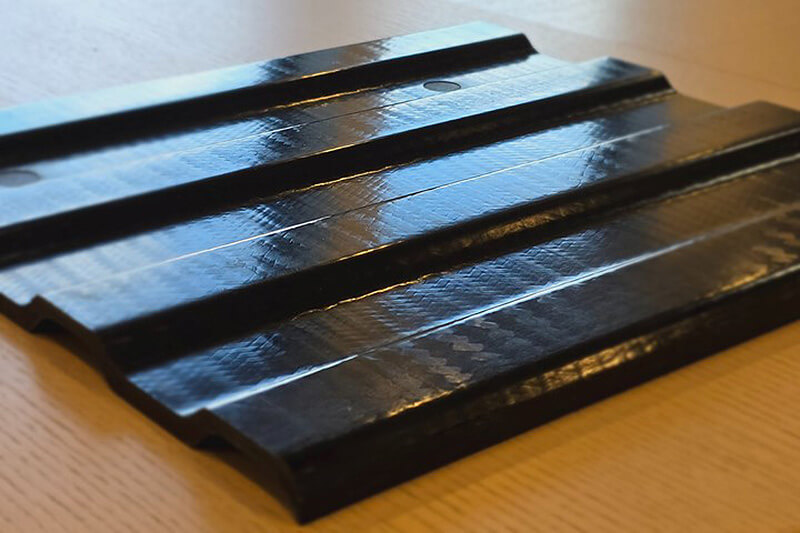
Noblesville, IN: (September 2024) With the increased electrification of vehicles, automotive OEMs are looking to lightweight but durable materials with optimal structural properties for weight savings, extended range and fuel economy. With these core requirements in mind, what better application to showcase than a next-generation sheet molding compound (SMC) pickup truck bed?

SMC composites are not a new truck bed solution; they’ve actually been used for several years thanks to their durability, resilience and ability to withstand weathering. However, the truck bed’s role as a rugged and versatile tool was an ideal application for IDI Composites International (IDI, Noblesville, Ind., U.S.) to explore a new co-molded approach to SMC reinforcement, aimed to achieve complex geometry without additional reinforcement and durability.

IDI is a global formulator and manufacturer of thermoset molding composites and compounds for OEMs, Tier 1 suppliers and molders. It operates from a state-of-the-art, 120,000-square-foot manufacturing facility and research center. Boasting ISO-certified manufacturing processes and rigorous quality control procedures, the company collaborates closely with its customers to develop thermoset molding formulas tailored to specific applications. IDI manufactures a comprehensive range of polyester/vinyl ester-based SMC and bulk molding compounds (BMC). The company’s products — known for their durability, resilience and performance under challenging conditions — serve a variety of industries, including automotive, electric and new energy vehicles (EV, NEV), mass transportation, defense, construction, oil and gas, medical and marine.

Seeking ways to further enhance the properties of SMC/BMC, the company partnered with braided materials manufacturer A&P Technology (Cincinnati, Ohio, U.S.) to develop a prepreg co-molding compound known as Fortium QISO. The material is a combination of IDI’s Fortium SMC and QISO, a triaxial braided product developed by A&P Technology. According to Kevin Cahill, director of composite technology and application engineering for IDI, the goal was to provide an advancement in SMC/BMC that used braided materials for additional reinforcement while also enabling the use of less material. “The main advantage is weight savings,” says Cahill. “So you would have had to have a much thicker part with the discontinuous fiber only, or you’d have to have a more complicated part with metal inserts.”

Rob Holcombe, product manager for IDI, adds, “Our clear objectives were to maintain the performance of the truck bed application, reduce weight and save on cost or at least remain cost neutral.”


A new class of reinforcing materials

Fortium is reinforced with 40-65% discontinuous glass fiber. This high level of reinforcement yields a material with high strength and impact resistance, while its discontinuous nature enables the materials to be molded into complex geometries via compression molding processes. Fortium can also use a variety of thermoset resins including polyester, vinyl ester, epoxy and vinyl ester/urethane hybrids to provide temperature resistance, toughness and durability including resistance to weathering, UV radiation, chemicals and regular wear and tear.

Holcombe says this choice of resins and reinforcement levels gives IDI composites the flexibility to optimize the cost and density of Fortium, making the material comparable to aluminum and steel on a performance-to-weight basis. It has already been used in the beds of many small pickup truck models.

For the development of its co-molded truck bed material, IDI used a Fortium SMC that features 50% reinforcement with 1-inch discontinuous glass fiber and a polyester/vinyl ester blend resin system. Cahill says additives provide pigmentation plus weathering and UV resistance. He notes that a similar result could be achieved with a flame-resistant material for battery enclosures.

The addition of A&P Technology’s QISO further enhances the performance of Fortium with quasi-isotropic properties. Unlike conventional woven products, QISO’s fibers are offset by 60°, providing improved strength and drapeability, crucial for the compound curvatures found in compression molded parts.

QISO is a 0°/±60° balanced and symmetric quasi-isotropic fabric. Compared to parts designed with traditional 0°/90° woven or noncrimp fabric (NCF) reinforcements, A&P says parts made with QISO are stronger, have better impact resistance and more consistent coefficient of thermal expansion (CTE). Three nonorthoganal woven biases contribute to QISO’s quasi-isotropic architecture — meaning it has the same properties in every direction, so the orientation of the fabric is not a concern. This enables simpler layups with fewer plies and a reduction in scrap.

Holcombe says that IDI selected QISO because of its flexibility and adaptability. “Getting continuous fiber sheets to form and play friendly when you’re molding — even when you’re prepregging — can be a real challenge. QISO is very friendly from a manufacturing standpoint, at a compounding level and it’s very friendly in the molding sense. Because of the format of the fibers, it’s able to conform well to complex geometries.”

“What we arrived at was something that looks, feels and acts kind of like a very thin sheet SMC,” he continues. “It doesn’t flow — because it’s a braided mat — but it’s still very familiar. It molds and it cures, the same because of the common chemistry between the two materials.”


Co-molding, testing and FEM validation

Co-molding is a manufacturing process where two or more materials are molded together to form a single part. This process allows for the combination of different materials or colors into one component. Typically, the process begins with placement of the primary material into a mold cavity. This material forms the base layer or structure of the final part. The secondary material, often with different properties, is introduced over or around the primary material and the two materials are integrated into a single part through compression molding.

With Fortium QISO, the co-molding process involves integrating QISO fabric into Fortium SMC, creating a composite with reportedly unmatched design flexibility and robustness. The QISO fabric is impregnated with the same resin system. This enables seamless co-molding, maintaining the same fiber loading by weight and density as traditional SMC. Again, the quasi-isotropic properties of QISO ensure less sensitivity to placement and orientation, reducing material scrap and enhancing manufacturing efficiency.

An additional benefit of the resulting material is in its recyclability. “It’s one type of material, so there’s no overmolded steel inserts or something that needs to be removed before recycling — the entire part is still 50% glass, 50% thermosetting resin,” Cahill says.

A comprehensive test matrix was developed to evaluate the performance of the Fortium QISO co-molded composites. Tests included tensile and flex testing, as well as large-scale impact tests using a custom impact tester. Impact testing involved simulating different impact scenarios, different types of darts and energies, and different layups and configurations under impact loading.

Holcombe explains, “The objective was to build a finite element model for the SMC by itself, for the QISO layers by themselves and then use the combination of the two and the impact result data to validate that model and prove it out at that lab scale.”

The results demonstrated that a 20% thinner co-molded panel with QISO reinforcement exhibited improved puncture resistance and minimal deflection compared to a thicker SMC panel. Moreover, QISO’s drapeability and moldability were validated in complex geometries, proving its feasibility for real-world applications.


Extending beyond truck bed applications

After completing composite panel tests, IDI Composites used its Fortium QISO FEM model to optimize several truck bed designs. This included identifying high-stress areas and placing localized braided QISO reinforcement there while using only discontinuous fiber SMC in complex geometry areas for optimized formability. IDI then fabricated several truck bed prototypes. Testing of these prototypes showed its success in reducing mass, cost and carbon footprint while maintaining strength and performance. By selectively combining continuous fiber reinforcement with a primarily SMC structure, these new truck beds showed showed significant weight reduction and enhanced impact performance. This approach also enabled reducing the amount of SMC used, which offset the higher cost of the braided prepreg, resulting in minimal cost impact. In addition, the enhanced performance of the co-molded construction contributed to a longer lifespan of the part.

While IDI Composites initially embarked on this project with truck beds in mind, it could see the advantages of using the Fortium QISO material in other applications.

For example, Cahill notes it is very good at resisting dynamic loading, making it well-suited for parts subjected to sudden impact loads such as battery enclosures, underbody shielding, fenders and bumpers. It could also be used to provide localized reinforcement in other vehicle systems.

He adds that another benefit of the material is creep resistance. noting that thermoplastic materials in applications under heavy loads and exposed to high temperatures are suspect to creep. Frunks — the front end trunk on electric vehicles — are one example where this comes into play. Electronics, often housed behind the frunks, generate heat, which over time can contribute to deflection of load bearing materials. “This material would really help limit and control deflection there indefinitely,” Cahill says.

In 2021, IDI demonstrated a flame-resistant panel using Fortium QISO that passed stringent thermal runaway tests, highlighting its potential in protecting battery packs and other critical components. This could be extended into additional mobility applications, such as advanced air mobility, where the goal is to reduce weight and cost while enabling higher volume production.

“The compression molding cycle we’re talking about here can be 3 minutes or less on this co-molded part,” says Cahill. “That allows for very high-rate production, as opposed to some of the other composites techniques that may take hours, or even days, to form and cure a part.”


John K. Merrell Honored with Induction into the ACMA Hall of Fame

Noblesville, IN: (November 2021) IDI Composites International’s founder, John K. Merrell, was posthumously honored with the American Composites Manufacturers Association (ACMA) Hall of Fame Award. The award recognizes a member who has attained distinction among his or her peers through their involvement and accomplishments in the composites industry and its associations.

“We’re honored to see our founder’s legacy commemorated in such a meaningful way,” states Tom Merrell, CEO of IDI Composites International. “He instilled the vision and principles we aim for everyday: commitment, creativity, and collaboration. Receiving recognition for his contributions to the industry from the ACMA means a great deal.”

Founded in 1966 by John K. Merrell, IDI Composites International has grown to be a leading global developer and manufacturer of thermoset molding compounds. As a material supplier, IDI collaborates with OEMs, Tier 1s, and molders to develop sheet molding compounds (SMC), bulk molding compounds (BMC), and structural thermoset composites (STC®) for the most demanding applications in the Transportation, Infrastructure, Construction, and Electrical markets.

IDI Composites International is headquartered in Noblesville, Indiana; in addition to its Indiana headquarters and manufacturing center, the group operates five wholly-owned manufacturing facilities in Puerto Rico, Mexico, France, the United Kingdom, and China. IDI’s sister organization, Norplex-Micarta, is the market-leading manufacturer of high performance thermoset composite materials based on impregnation and lamination technology. Norplex-Micarta has two manufacturing facilities in Iowa and China. It has just opened a third facility in Montana which will house Norplex Advanced Composites, a new venture aimed at expanding the company’s commitment to prepregs and advanced composite materials. Combined, the group has over 700 employees globally.

Throughout its 55-year history, IDI Composites International has remained family owned and operated. The collaborative spirit, creativity, and commitment to excellence which drove John K. Merrell to launch the company continues today as the foundation for the company’s continued success.

John Merrell passed away in June of 2015 after a 49-year career in the composites industry.